


Develop and characterize new materials with unique properties.
New materials with original properties.
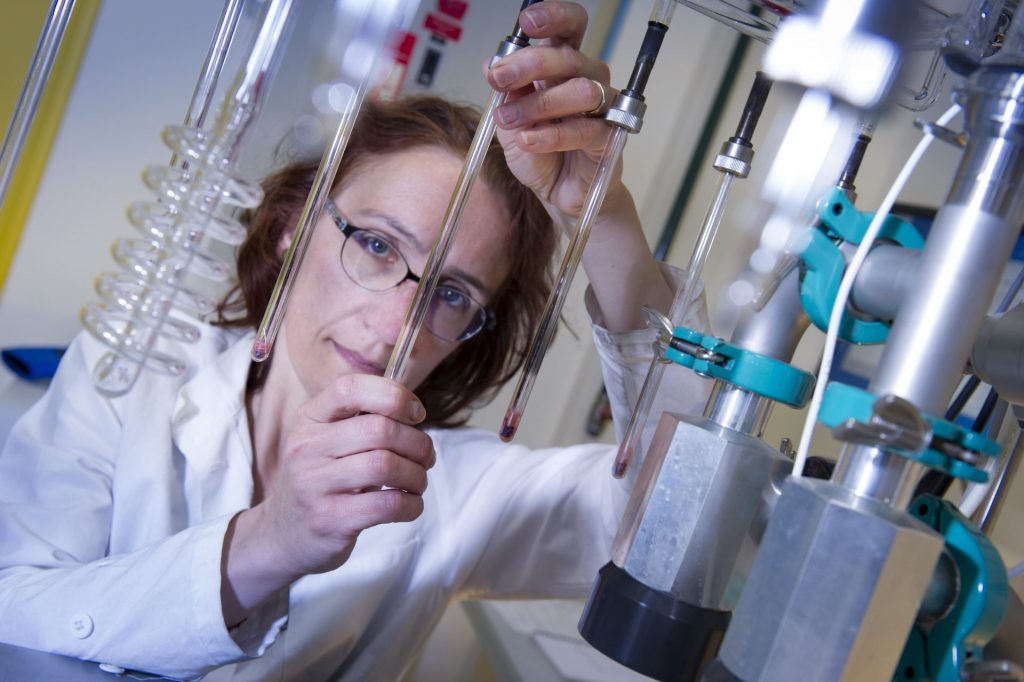
Interdisciplinary activities for the study of materials at different scales
Synthesis processes and in situ diagnostics
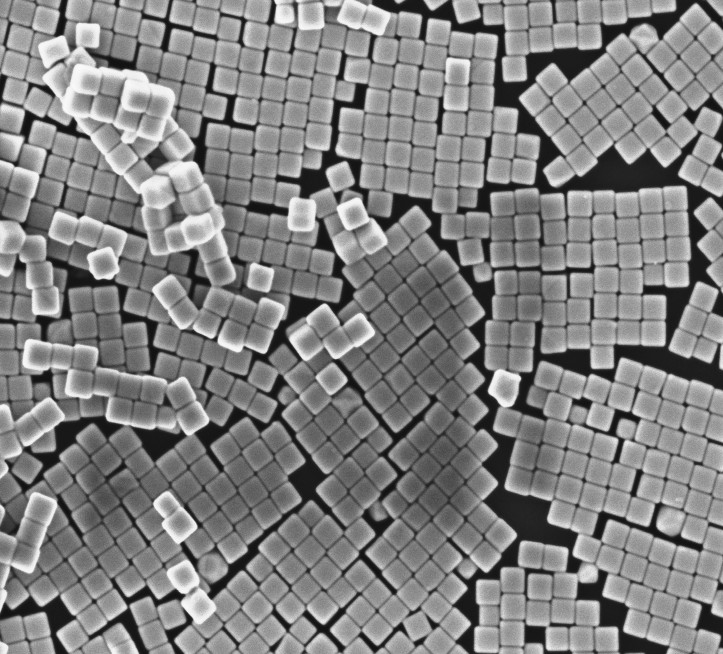
Interface chemistry, phase separation, assembly of microfluidic components…
Hybrid and composite systems
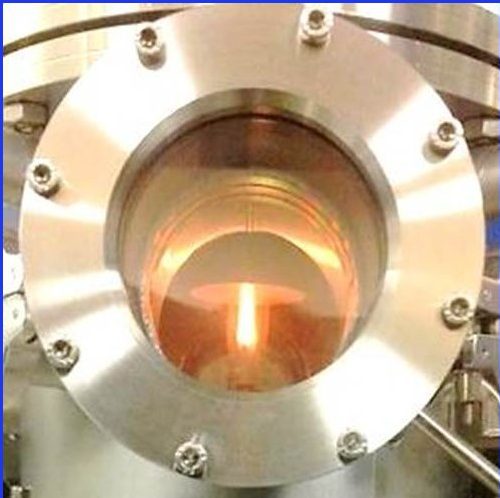
Producing hybrid or composite materials using innovative synthesis processes
Materials of the future for electronics and optics
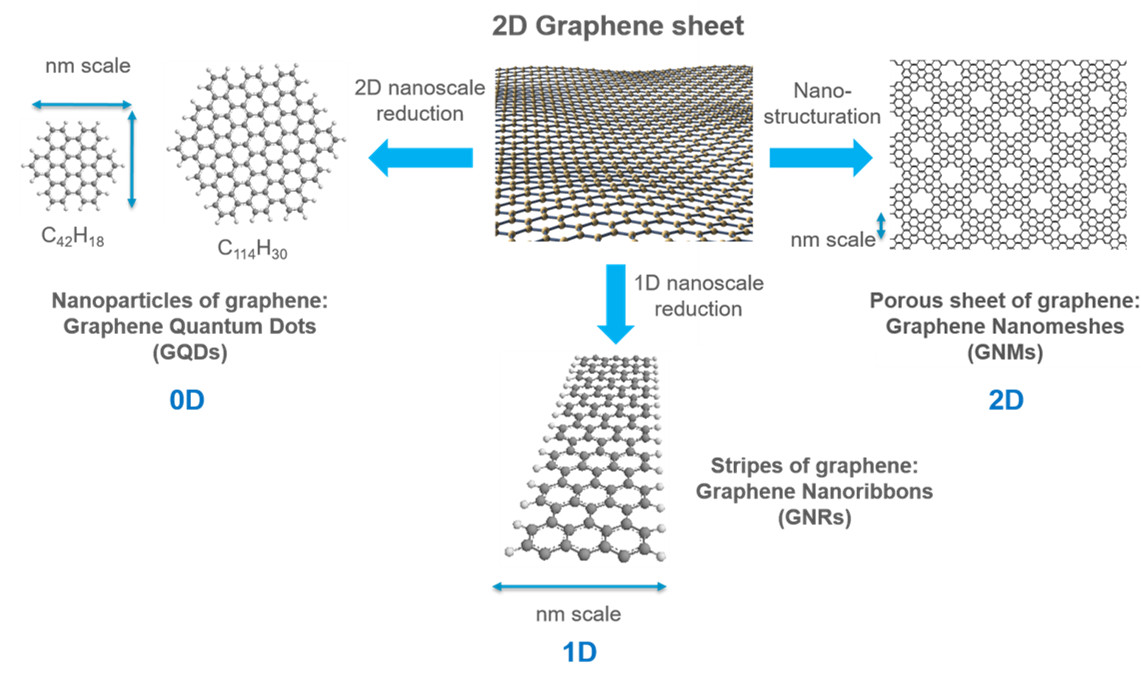
Nanomaterials for electronic, optical, and optoelectronic devices.
Heritage materials
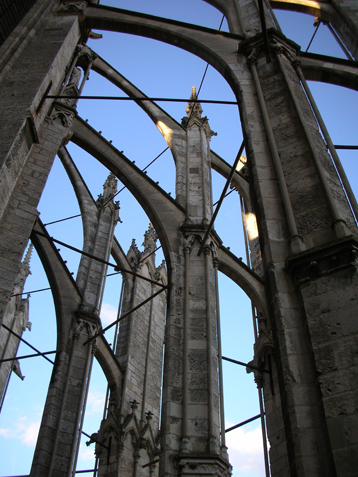
Understanding the historical production and evolution of materials over the long term
Highlights
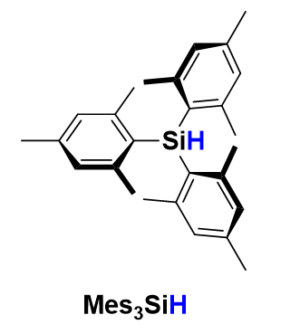
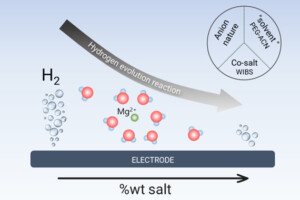
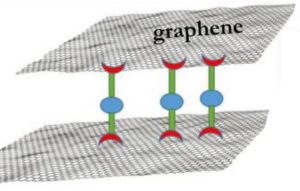
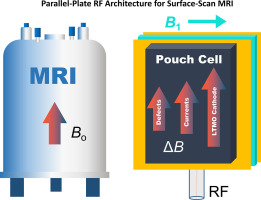
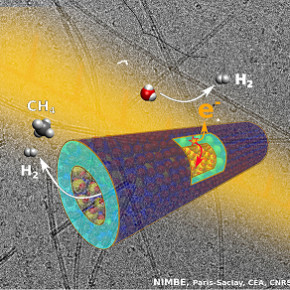
The fundamental research on materials undertaken at NIMBE enables the development of methods for creating entirely new materials with unique properties.
This research enables to adapt these materials to get the best performances in the realization of electronic or optical devices. Another research approach is to adapt materials for optimum performance in energy production, corrosion resistance, functionalized materials and catalytic properties.
Theoretical methods and simulations are used to guide this research, with the aim of producing “tailor-made” materials.
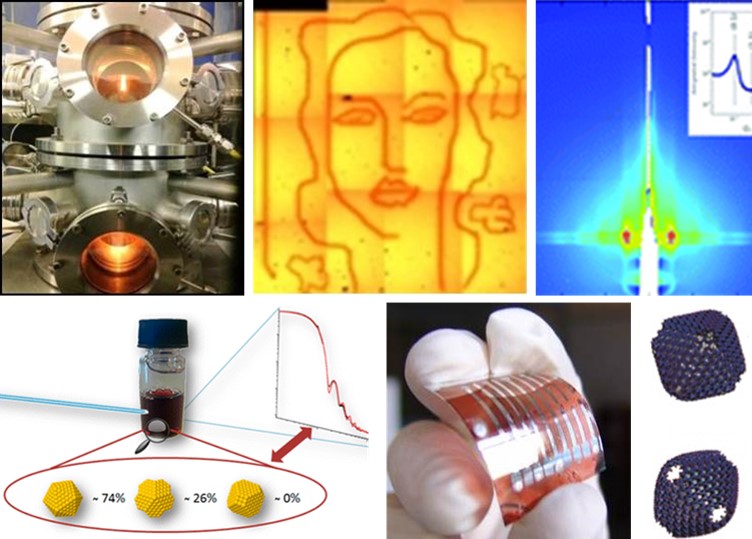
Other NIMBE studies are exploring heritage materials, and more specifically their ageing, providing valuable insights into corrosion and durability. This expertise is essential for making the right choice of materials for tomorrow’s diverse long-term applications, particularly in the nuclear field.
This research on materials and nanomaterials covers in particular several activities developed by each of the NIMBE laboratories:
Material Ssnthesis:
- Synthèse et analyse de nano-objets en phase gazeuse (LEDNA)
- Nano-chimie, nano-objets – autoassemblage (LEDNA, LIONS)
- Matériaux nanocomposites nanostructurés (cristallisés et matière molle.) : de leur élaboration, à leurs propriétés (LEDNA, LICSEN)
- De la molécule au matériau moléculaire (LICSEN)
- Matériaux nanostructurés pour l’énergie (LEEL, LEDNA, LICSEN)
- Caractérisation de matériaux pour l’énergie (LEEL, LSDRM)
- Interfaces, fluides complexes et microfluidique (LIONS, LICSEN)
Radiation, corrosion, aging, historic materials:
- Matériaux et irradiation (LIONS)
- Corrosion long terme de matériaux métalliques (LAPA)
- Analyse métallographique du fer des grands bâtiments du Moyen Age (LAPA)
- Science des matériaux et chimie pour l’archéologie et le patrimoine (LAPA)
Theory, modeling, simulation: