

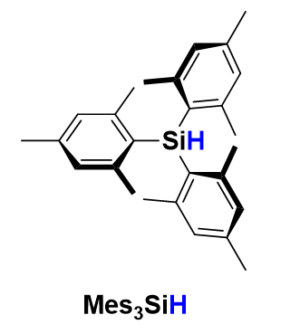
As part of research conducted at CEA-IRAMIS (NIMBE-LCMCE), scientists have obtained the first experimental values for the hydroxyl content of hydrosilanes. Published in Inorganic Chemistry, this work removes a major obstacle to better understanding and predicting the reactivity of these reagents, which are widely used in industrial chemistry.
Hydride (H–) transfers are fundamental steps in many chemical transformations for industrial applications, in the energy sector, and in biochemical processes. These reactions involve a hydride donor and a hydride acceptor. Understanding these phenomena requires determining the hydricity values of the reactants involved—that is, their ability to donate a hydride (and, conversely, to accept one). Hydricity, also denoted as ∆H–, is the thermodynamic value that reflects the change in free energy associated with the dissociation of a hydride donor (AH) into hydride (H–) and its conjugate acceptor (A+). (See equation 1)
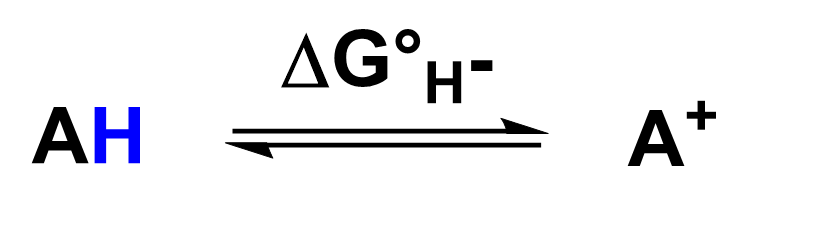
Equation 1
Determining the hydricity of transition metal hydrides is the focus of extensive research, particularly due to their implications in energy-related fields such as hydrogen production and carbon dioxide reduction. The same is true for organic hydrides such as Hantzch esters, which are analogs of bioorganic hydride donors. In contrast, few studies have focused on determining the hydricity of inorganic hydrides—such as hydrosilanes or hydroboranes—and those that have have primarily relied on theoretical approaches. The NIMBE/LCMCE team proposes an initial experimental approach to evaluate the hydricity of model hydrosilanes (Figure 1). These model substrates were chosen because of the stability of the conjugated acceptors—the silylium ions—that they form after abstraction of their hydrides.
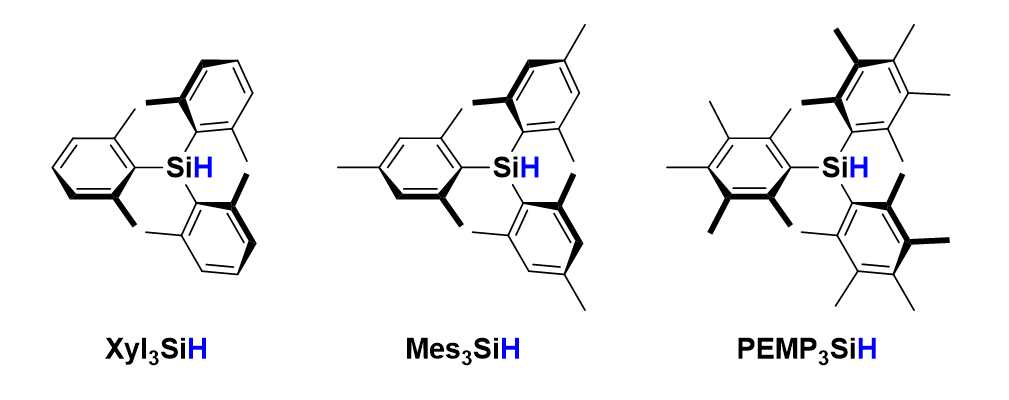
Figure 1 – Model hydrosilanes used in this study
The hydricity of molecular compounds can be determined using three methods. Base-assisted heterolytic hydrogen cleavage is a particularly effective technique when applied to transition-metal complexes, but it is not conclusive when used with silicon derivatives due to the irreversibility of the reaction (Figure 2). At the NIMBE/LCMCE, we initially focused on a second method based on hydride transfer with an acceptor (scheme). An initial estimate of the hydricity values was obtained for a series of triarylhydrosilanes using this approach, but it remains limited due to slow reaction kinetics and interfering side reactions.
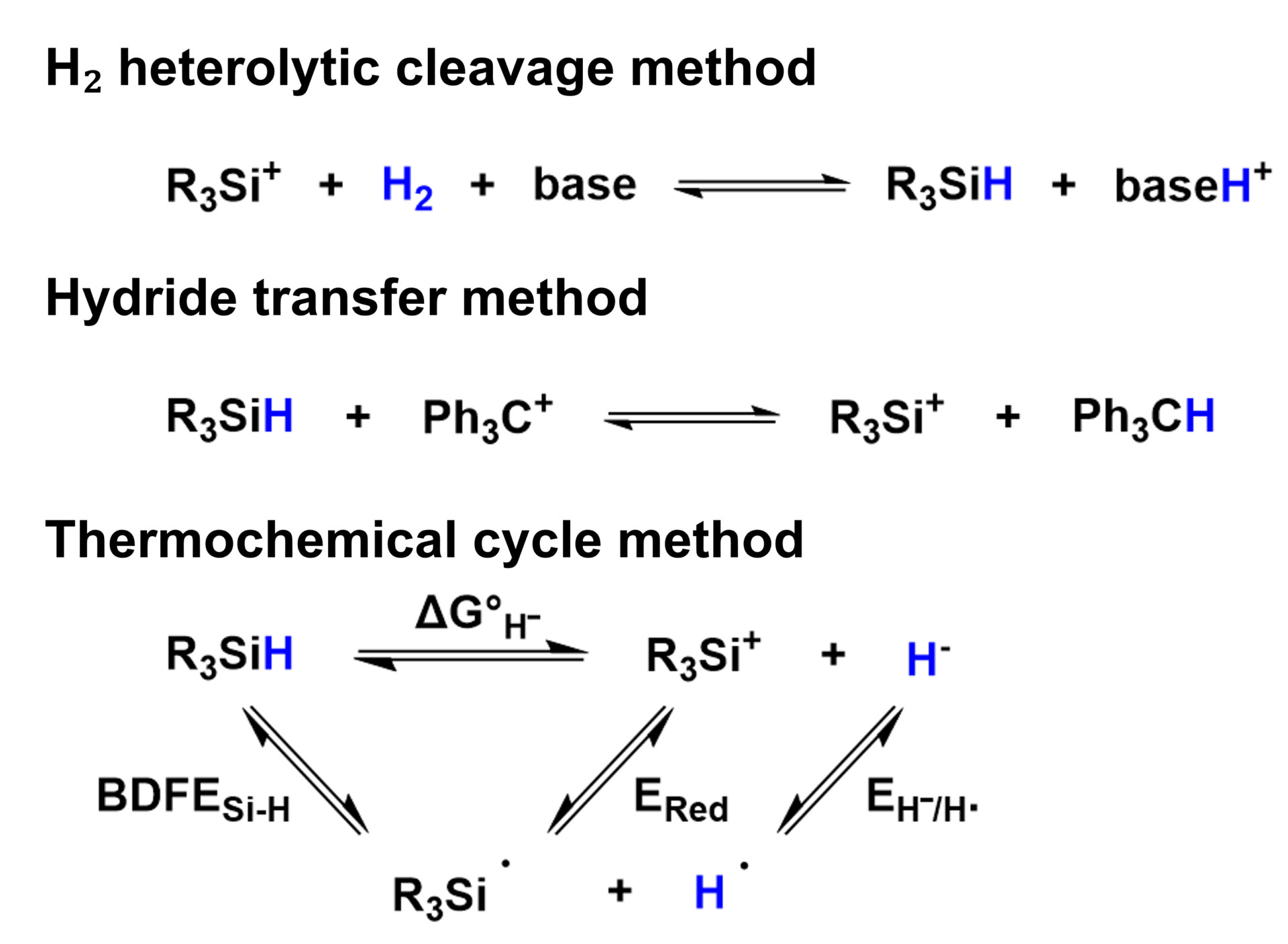
Figure 2 – Methods for determining hydricity suitable for hydrosilanes
Ultimately, a method based on the thermochemical cycle approach (Figure 2) had to be developed, using the redox potentials of silicon intermediates combined with theoretical calculations. The models were synthesized, and their redox potentials were measured using cyclic voltammetry. This made it possible to determine the hydricity values of the various hydrosilanes used in this study. Thus, PEMP3SiH, Mes3SiH, and Xyl3SiH exhibit hydricities in acetonitrile of 80.5 kcal·mol⁻¹, 86 kcal·mol⁻¹, and 89 kcal·mol⁻¹, respectively. These results are consistent with those obtained using the hydride transfer method. The experimental values are higher than the theoretical values calculated by DFT, by approximately 6 kcal·mol⁻¹ for PEMP3SiH. Within the team, experimentally determining their hydricities allowed us to select catalysts for the development of a new method for synthesizing hydrosilanes.
We hope that this method will help validate and improve the computational models used in main-group chemistry. Furthermore, this approach could be applied to other inorganic hydrides.
Reference
Experimental evaluation of the hydricity of hydrosilanes,
L. Sévery, E. Nicolas, A. Mifleur, T. Cantat, Inorg. Chem. 64, 26 (2025), 12927–12931.
Collaboration
Les précurseurs des hydrosilanes/silyliums utilisés dans cette étude ont été aimablement fournis par Prof. Dr. Thomas Müller et Dr. Lena Albers de l’Université de Oldenburg (Allemagne).
Institute of Chemistry, Carl von Ossietzky University of Oldenburg
D-26129 Oldenburg
CEA-IRAMIS contact
Alexis Mifleur – NIMBE/LCMCE laboratory.