
- Project title: Spindiag
- CEA collaborators: SPEC LNO
- Project status: 6 months starting 09-2019; first prototype assembled 02-2020; tested, then another prototype in 2023; currently in service in the DIAMSS project
- Keywords: GMR sensor, Wheatstone bridge, ×8600 amplification, low noise, battery
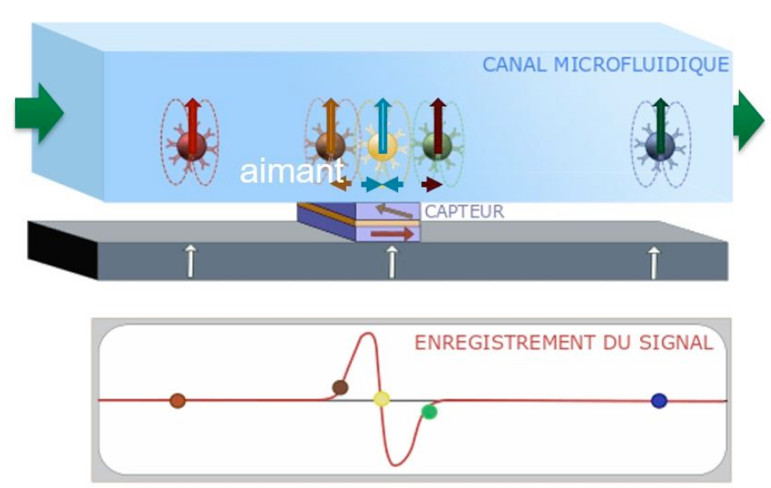
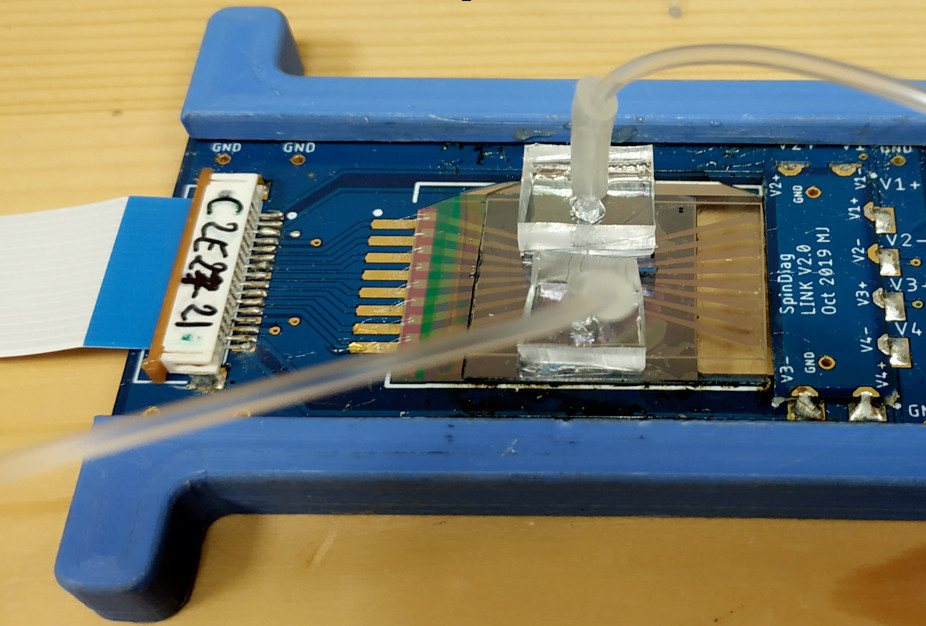
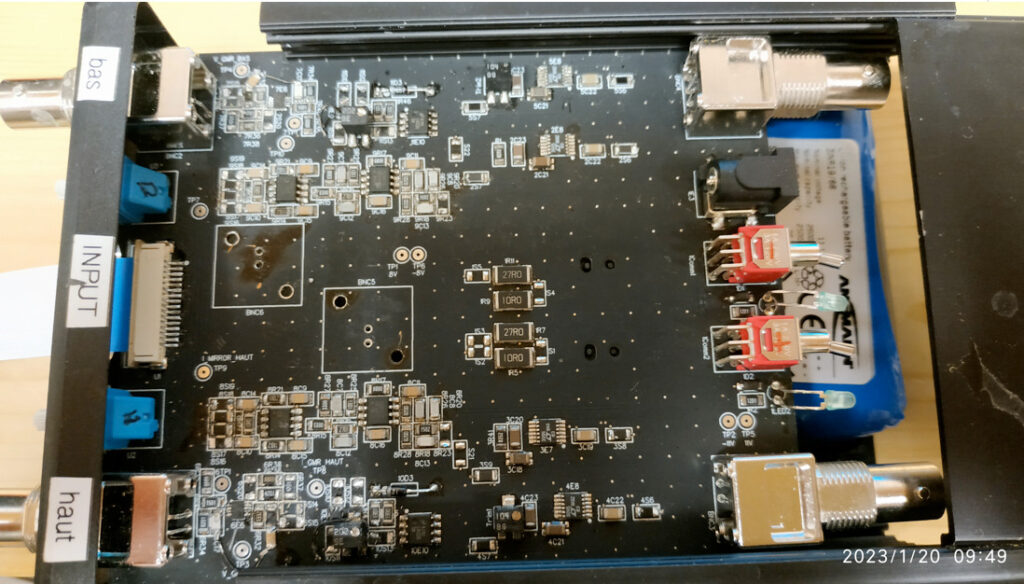
The LNO Nanomagnetism and Oxide laboratory developed GMR sensors to detect weak magnetic fields. In a global health application, LNO proposes detecting specific bacteria that have been tagged with specific antibodies and labeled with magnetic microbeads. These pass through a microfluidic channel to be detected by two GMR sensors facing each other. The electrical signals from these two sensors require appropriate analog processing (Wheatstone bridge, high-pass filter, amplification, low-pass filter). A metal enclosure and a two-channel electronic board with high gain (×8300), low noise, and battery power were designed and validated by a student.