

The Nanomagnetism and Oxides Laboratory of SPEC is recruiting a permanent experimental physicist in spintronics and magnetic sensing.
SPEC is a CEA-CNRS joint research unit comprising approximately 160 people and conducting multidisciplinary research in condensed matter physics, from quantum physics to complex systems. SPEC is a department of IRAMIS within the CEA’s Fundamental Research Directorate. The LNO group consists of approximately 35 people, including 16 permanent CEA staff. The LNO’s activities are part of an overall strategy aimed at deepening our understanding of magnetism in condensed matter, striking a balance between cutting-edge research and the development of new instruments and applications. These activities are carried out within the national framework of the PEPR SPIN program and through numerous academic and industrial collaborations.
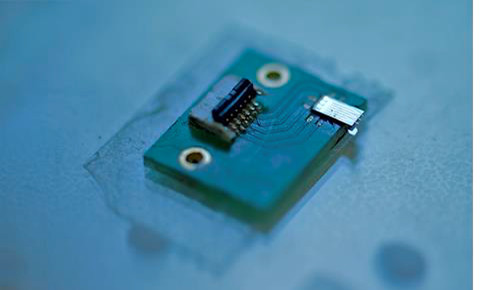
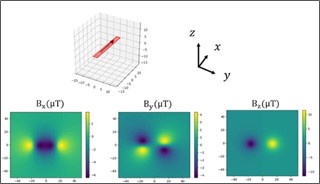
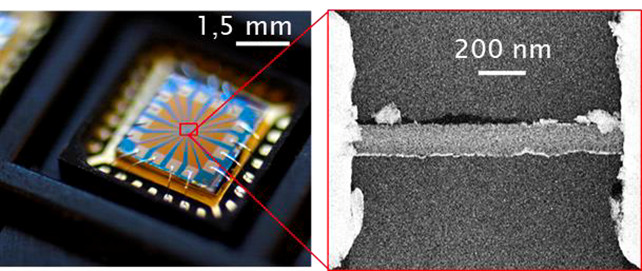
The LNO’s activities in the field of magnetic sensors, consist of developing high-performance sensors based on spin electronics, for a wide variety of applications. These developments are based on a deep understanding of physical phenomena (magnetic couplings, properties of thin-film materials, spin electronics, transport, noise, electronics, etc.), control of thin film deposition to optimize and adapt stacks for specific applications, electrical and magnetic characterizations to measure sensor performance, and modeling with macrospin or micromagnetic simulations. These sensors can be developed all the way to full systems by integrating them into setups/demonstrators using the electronics, manufacturing and packaging tools developed at the LNO.
Position description
The Service de Physique de l’État Condensé (SPEC – CEA/CNRS UMR3680 – Université Paris-Saclay) is opening a CEA permanent researcher position in the area of experimental magnetic sensing, and is looking for highly motivated candidates with a strong background in spintronics and nanomagnetism, and a keen interest in applications. Candidates should have a proven track record in those fields, as well as high-level skills in at least some of the following items: thin films deposition and characterization, magnetometry, magneto-transport, noise measurements, micro-/nano-fabrication and magnetic simulations. Skills in electronics and/or setup instrumentation and/or AI for data treatment will be appreciated. Application-oriented research experience is particularly welcome.
The successful candidate is expected to integrate into the research effort of the Nanomagnetism and Oxides Laboratory at SPEC. Human qualities will be a very important aspect, including ability to conduct collaborative research. The candidate will work in close synergy with the existing team at SPEC, within the academic and industrial collaboration framework of the magnetic sensing team. The candidate must be able to join existing experimental projects, maintain and upgrade the lab’s measurement platforms, develop micro- and nanofabrication processes in relation to the lab’s activities, and elaborate close collaborations with postdocs, PhD students, and permanent staff. The candidate must be able to set up or participate in projects, with a focus on application-oriented developments, and seek funding.
Keywords
Spin electronics, micromagnetism, magnetic sensors
Profile’ candidates
Candidate’s profile
PhD with a minimum of 2 years of postdoctoral experience.
Skills/Expertise
Spintronics, nanomagnetism, thin film deposition and characterization, magnetometry, magneto-transport, noise measurements, micro-/nanofabrication, magnetic simulations.
Application procedure
Applicants must submit their application via the CEA website and send a complete application file to
The interested candidates should send before May 1st, 2026 :
- Curriculum vitae including a list of references.
- Publication list.
- Motivation letter.
- Research statement of maximum 4 pages.
- Recommendation letters.
Shortlisted candidates will be invited for an interview in June 2026.
Expected started date
October 2026